
Why Do Ships Need Dedicated Marine Telephone Systems?
Modern ships operate in some of the world's most challenging environments. Whether transporting cargo across oceans, supporting offshore energy projects, or carrying passengers, vessels rely on clear and dependable communication to maintain safety and operational efficiency.
A dedicated marine telephone system provides reliable communication between crew members, control rooms, engine spaces, bridge operations, and emergency response teams. Unlike standard communication equipment, marine communication systems are designed to deliver dependable performance in demanding maritime operations where communication reliability is essential for safety and efficiency.
Without a purpose-built marine communication solution, communication failures can delay operations, increase safety risks, and complicate emergency response procedures.

Importance of Reliable Communication on Ships
Ships need dedicated marine telephone systems because standard commercial telephones are not designed for harsh maritime environments. Marine communication equipment is engineered to withstand salt spray, humidity, extreme temperatures, vibration, and continuous operation while maintaining reliable performance.
These systems support crew coordination, navigation activities, machinery monitoring, maintenance operations, and communication with ports and harbor facilities. They also play an important role in maritime safety by enabling crews to quickly report incidents, communicate hazards, and coordinate emergency response efforts.
During situations such as equipment failures, fires, flooding, or medical emergencies, dependable communication helps crews respond more effectively and reduce operational risks. Dedicated marine telephone systems provide fixed, always-available communication points throughout a vessel, supporting safer and more efficient operations.
Note: While radio systems are widely used onboard, they do not completely replace fixed marine telephone networks. Dedicated marine telephones provide stable communication points for both routine operations and emergency situations.
Communication Challenges Ships Face
Marine environments create unique challenges that can quickly damage conventional communication equipment.
1. Saltwater Corrosion
Salt-laden air accelerates corrosion of metal components, connectors, and electronic circuits. Marine telephones use corrosion-resistant materials and protective enclosures to extend service life.
2. Constant Vibration
Ship engines, propulsion systems, and rough sea conditions generate continuous vibration. Dedicated marine telephones are designed to withstand these conditions without performance degradation.
3. Moisture and Weather Exposure
Rain, sea spray, humidity, and washdowns can damage ordinary communication devices. Marine communication systems typically feature IP-rated weatherproof protection to prevent water ingress.
4. High Noise Levels
Engine rooms, cargo handling areas, and offshore workspaces often generate high levels of background noise that can make communication difficult.
To ensure clear conversations in these environments, marine telephones are commonly equipped with features such as noise-canceling technology, high-volume speakers, amplified handsets, and acoustic accessories.
Together, these capabilities help improve speech clarity and ensure important messages can be heard and understood even in challenging operating conditions.
‘‘Offshore installations face many of the same communication challenges as ships. Learn how these facilities maintain reliable communications in our guide to communication systems for oil drilling platforms.’’

Key Functions of Marine Telephone Systems
A marine telephone system serves much more than basic voice communication.
1. Operational Coordination
Effective communication is essential for the smooth operation of any vessel. Crew members rely on marine telephone systems to coordinate navigation, cargo handling, maintenance activities, and day-to-day onboard logistics.
Whether communicating between the bridge and engine room, coordinating deck operations, managing cargo loading procedures, or scheduling maintenance work, reliable communication helps ensure tasks are carried out safely and efficiently.
2. Emergency Response Communication
During emergencies, rapid communication can be critical to protecting both personnel and assets. Marine telephones allow crew members to quickly report incidents such as fires, flooding, equipment malfunctions, medical emergencies, or security concerns.
Dedicated emergency communication systems provide direct and dependable communication channels, helping ensure that information reaches the appropriate personnel immediately when a fast response is required.
The effectiveness of emergency communication depends not only on reliable communication equipment but also on proper system design, regular maintenance, crew training, and adherence to established vessel safety procedures.
3. Internal Ship Communication
Large vessels may contain multiple decks, compartments, machinery spaces, and operational zones. Marine telephone networks provide reliable communication across the entire vessel without relying solely on mobile devices or radios.
4. Communication with Shore Facilities
Ships regularly communicate with ports, shipyards, coast guard authorities, offshore platforms, and logistics operators to support safe and efficient operations. Marine telephone systems primarily support internal vessel communication and may integrate with broader communication infrastructure that includes radio, satellite, VoIP, and shore-based communication networks.
As part of an integrated communication ecosystem, marine telephone systems support onboard coordination while external communication technologies enable communication with shore-based personnel and facilities.
Expert Tip: At LightCom, we recommend selecting marine communication equipment based on the installation location, environmental exposure, onboard noise levels, available communication infrastructure, and emergency response requirements. Matching the communication system to the vessel's operating conditions helps improve long-term reliability, simplifies maintenance, and supports dependable performance throughout its service life.
‘‘Learn more about a ship communication deployment in our article on Reliable Ship Intercom Systems.’’

Important Features of Marine Telephone Systems
When selecting a marine communication solution, operators typically look for several critical features.
1. Weatherproof Construction
Marine telephones are built to withstand continuous exposure to challenging environmental conditions. Many models feature IP66 or IP67-rated protection, sealed enclosures, water-resistant components, and UV-resistant materials that help prevent damage from rain, sea spray, humidity, and prolonged sunlight exposure.
These protective features help ensure reliable operation in both onboard and offshore environments.
2. Corrosion Resistance
One of the most important characteristics of marine communication equipment is its ability to resist corrosion. Marine telephones are often manufactured using corrosion-resistant materials and protective coatings that help withstand salt spray, humidity, and the harsh marine atmosphere. This added protection helps extend equipment lifespan and reduce maintenance requirements.
3. Multiple Connectivity Options
Different vessels have different communication infrastructure requirements. To accommodate a wide range of installations, marine telephone systems are commonly available in SIP/VoIP, Analog, and 4G LTE configurations.
This flexibility allows operators to integrate communication equipment with both modern IP-based networks and existing legacy systems without requiring major infrastructure changes.
4. Emergency Hotline Functions
Many marine telephone systems include features designed to support rapid emergency communication. These may include one-touch emergency calling, dedicated hotline dialing, priority communication channels, and integration with alarm systems.
By enabling faster access to assistance and critical personnel, these capabilities can help improve emergency response efficiency onboard.
5. Continuous Operation
Marine communication systems are often expected to operate 24/7 with minimal maintenance and high reliability.
Expert Tip: Maritime communication professionals often recommend selecting equipment with proven long-term reliability, weatherproof protection, and support for multiple communication technologies to accommodate future infrastructure upgrades.

How to Choose Between Analog, SIP, and 4G Marine Telephone Systems
Modern vessels use different communication technologies depending on their existing infrastructure, operating environment, and communication requirements. Marine telephones are commonly available in Analog, SIP (VoIP), and 4G LTE versions, each offering distinct advantages for different installation scenarios.
Analog Marine Phones: Ideal for vessels with existing traditional telephone infrastructure, analog systems offer straightforward installation, dependable operation, and compatibility with legacy communication networks. They remain a cost-effective choice for retrofit projects and ships that do not require IP-based communications.
SIP (VoIP) Marine Phones: Designed for IP-based communication networks, SIP systems integrate seamlessly with onboard communication infrastructure while supporting centralized management, advanced calling features, and future system expansion. They are well-suited to modern vessels and offshore facilities with digital networks.
4G LTE Marine Phones: Best suited to remote docks, marinas, workboats, and offshore locations without wired communication infrastructure, 4G LTE systems use cellular networks to simplify installation while providing reliable voice communication wherever adequate mobile coverage is available.
Tip: The most suitable communication technology depends on factors such as the vessel's existing infrastructure, installation location, power availability, and operational requirements. Many marine operators use a combination of Analog, SIP, and 4G marine telephone systems to provide reliable communication across different areas of a vessel or offshore facility.
Where to Install Marine Telephones on a Vessel
The communication requirements on a vessel vary depending on the installation location. Choosing equipment designed for the surrounding environment helps improve reliability and usability.
Installation Area | Recommended Solution | Why It Works |
Engine room | Heavy-duty telephone with acoustic hood | Improves communication in high-noise environments. |
Bridge | SIP or Analog marine telephone | Supports reliable operational coordination and bridge-to-crew communication. |
Outdoor deck | IP66/IP67 weatherproof telephone | Withstands rain, salt spray, UV exposure, and harsh weather conditions. |
Gangway or access point | Hotline telephone | Provides immediate communication for boarding, access control, and emergencies. |
Cargo handling area | Telephone with flashing beacon | Combines voice communication with visual alerts in busy operational areas. |
Port or shipyard | Weatherproof SIP or Analog telephone | Supports communication between loading areas, maintenance teams, and operations personnel. |
Offshore platform | Explosion-proof telephone (where required) | Suitable for hazardous environments where certified communication equipment is required. |
Remote dock or marina | 4G LTE or solar-powered emergency call box | Ideal where wired communication infrastructure is unavailable or difficult to install. |
Marine Communication Solutions for Vessels and Offshore Facilities
Selecting the right marine communication equipment depends on factors such as installation location, network infrastructure, operational requirements, maintenance expectations, and system integration needs.
Communication solutions may be deployed across vessels, offshore platforms, ports, shipyards, and other maritime facilities where dependable communication is required for daily operations and emergency coordination.
When evaluating marine communication equipment, vessel operators should consider environmental ratings, technology compatibility, maintenance requirements, long-term reliability, and any applicable project or regulatory requirements. Several manufacturers offer solutions designed for marine and offshore environments.
LightCom provides marine and offshore communication solutions designed for these challenging environments. Available in Analog, SIP, and 4G configurations, these systems can support communication requirements across vessels, offshore platforms, ports, shipyards, and other maritime facilities.
Some solutions commonly used in marine and offshore environments include:
LC103-KB Heavy-Duty Industrial Telephone - A rugged communication phone available in Analog, SIP, and 4G versions, suitable for shipboard and offshore installations.
LC101-DB Industrial Weatherproof Hotline Phone - Designed for harsh outdoor and marine-adjacent environments where rapid point-to-point communication is required.
LC103-DB Open-Face Industrial Weatherproof Hotline Phone - Suitable for operational areas that require quick-access communication points.
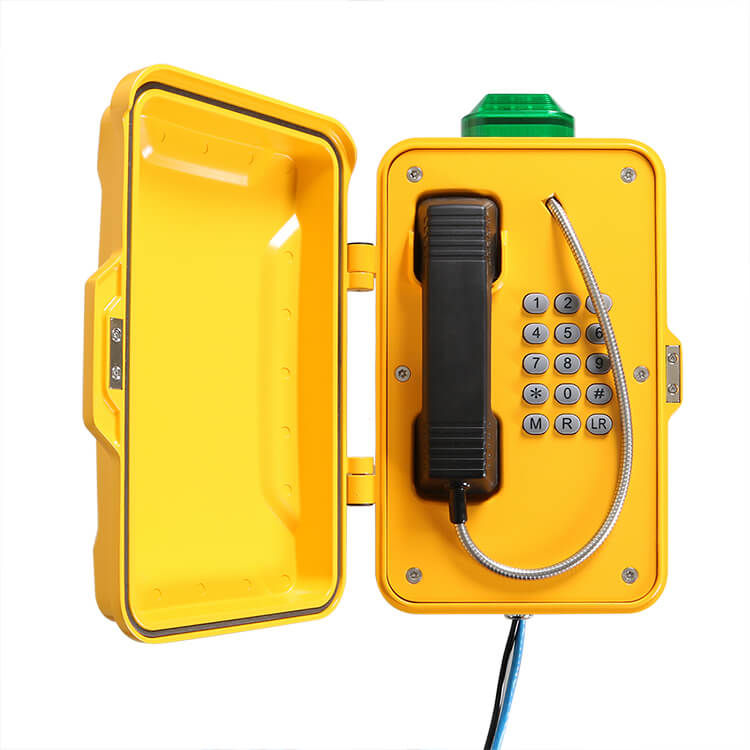
LC103-KB-L Industrial Phone with Flashing Beacon - Combines voice communication with a visual alert, helping improve awareness in noisy environments.
LC-SP-01 Acoustic Telephone Hood - Can be installed around communication points in high-noise areas such as engine rooms, machinery spaces, and cargo handling zones to improve speech intelligibility.
For a real-world example of communication equipment operating in demanding maritime conditions, see how our offshore communication phones helped the U.S. Coast Guard in extreme environments.

Need Help Choosing the Right Marine Telephone System?
Whether you're outfitting a commercial vessel, passenger ship, offshore platform, port, shipyard, or marina, selecting the right communication solution depends on your operating environment and technical requirements.
LightCom offers rugged marine communication phones in Analog, SIP, and 4G configurations, along with accessories such as acoustic hoods, flashing beacons, and emergency communication systems. Our team can recommend a solution tailored to your installation environment, communication infrastructure, and safety objectives.
Contact LightCom to discuss your project and receive a recommendation for your marine communication requirements.
Final Thoughts
Dedicated marine telephone systems help vessel operators meet communication requirements defined by project specifications, company safety procedures, classification societies, and applicable maritime regulations.
As ships become increasingly connected, purpose-built marine communication infrastructure remains a foundational component of maritime safety and operational resilience.
Frequently Asked Questions
What is the difference between a standard telephone and a marine telephone?
Marine telephones are engineered to resist salt spray, moisture, corrosion, vibration, and extreme weather conditions. Standard telephones are generally not designed for long-term maritime use.
How long do marine telephone systems typically last?
The service life of a marine telephone system depends on environmental conditions, installation quality, and maintenance practices. High-quality marine communication equipment designed with corrosion-resistant materials and weatherproof enclosures can often remain in service for many years, even in demanding offshore environments.
Do marine telephone systems require frequent maintenance?
Most marine communication systems are designed for continuous operation with minimal maintenance. However, periodic inspections of enclosures, wiring, mounting hardware, and communication connections can help ensure reliable long-term performance.
How do marine telephone systems perform during power outages?
Many marine communication systems can be integrated with backup power sources such as batteries, UPS systems, or emergency power networks to help maintain communication during power interruptions.
What accessories are commonly used with marine communication phones?
Depending on the application, marine communication systems may be paired with acoustic hoods, horn speakers, flashing beacons, emergency call stations, and hands-free intercoms to improve communication performance in challenging environments.


Comments