
In busy, high-risk environments, stopping to pick up a phone isn’t practical or safe. Hands free telephones enable instant communication without interrupting critical tasks.
At LightCom, our hands free telephones are built for industrial conditions where users may be wearing PPE, operating machinery, or working in high-noise environments where standard phones fail. They deliver clear, reliable communication when speed and clarity matter most.

Hands Free Communication in Industrial Environments
Hands free telephones are industrial communication devices that allow users to initiate and receive calls without using a handset. Typically activated via push buttons or auto-dial functions, they provide two-way voice communication through integrated microphones and speakers.
Industrial-grade systems support full-duplex or half-duplex communication and use acoustic echo cancellation to maintain clear audio in high-noise environments. They also integrate with control room systems, emergency networks, and industrial VoIP infrastructure for centralized communication and faster response.
Operates without manual handling in active workflows
Maintains intelligible audio in high-noise conditions
Supports full- or half-duplex based on application
Integrates with control rooms and VoIP systems
Common Deployment Environments for Hands Free Telephones
Hands free telephones are widely used across industries where communication must be fast, reliable, and accessible without manual handling.
 Industrial production areasEnables real-time communication on factory floors without interrupting machine operation or workflow. |  Tunnels and transportation infrastructureEnables emergency and operational communication in tunnels, railways, and roadside installations. |  Cleanroom and controlled environmentsAllow communication without physical contact, supporting hygiene and contamination control protocols. |
|---|---|---|
 Parking facilities and public spacesProvide accessible communication points for safety, assistance, and emergency use. |  Control rooms and monitoring stationsFacilitates instant communication between operators and field personnel. |  Hazardous and high-risk zonesEnsures safe communication in environments where handling devices may not be practical. |
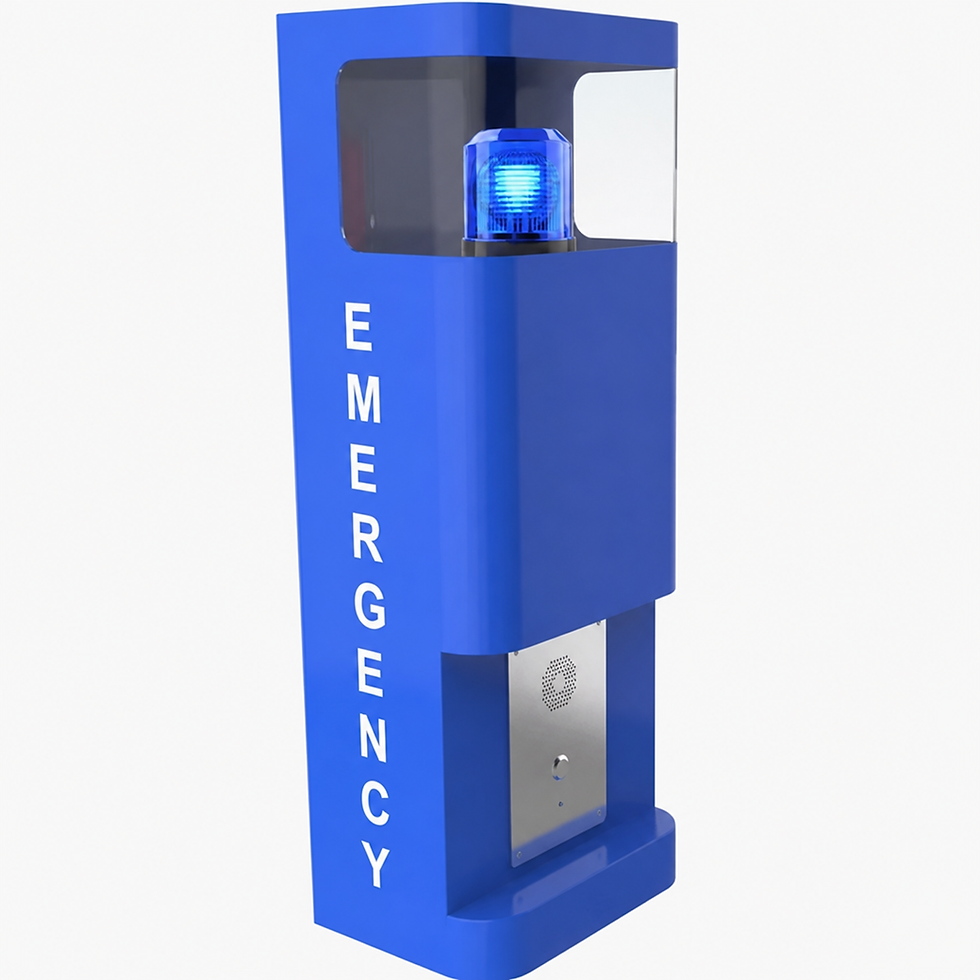
Our Emergency Call Boxes




Why Choose LightCom Hands Free Telephones?
LightCom designs hands free telephones for high-noise, safety-critical environments where communication failure is not an option. Our systems are engineered for reliability, flexibility, and real-world industrial deployment.
01
Proven reliability in critical conditions
Built for continuous operation with up to 65,000 hours MTBF (7.5 years 24/7 working) and 99.999% system reliability, ensuring communication remains available in emergency and operational scenarios.
02
Multi-network compatibility
One device supports Analog, SIP (VoIP), and 4G connectivity, allowing seamless deployment across legacy systems and modern IP-based infrastructure.
03
Built for harsh industrial environments
Engineered to perform in high noise, vibration, moisture, and temperature fluctuations, with rugged construction designed for long-term field use.
04
Customization for real deployment needs
Supports 6+ customization options, including enclosure design, labeling, signaling features, and power configurations to match specific site requirements.
05
Advanced functionality beyond basic telephony
Includes noise reduction, pre-configured dialing, system integration, and control interfaces, enabling use in complex industrial and emergency communication systems.
06
Global deployment and technical support
Trusted across manufacturing, energy, transport, and public infrastructure, with worldwide delivery and technical support for system design and integration.
Features of Hands Free Telephones
Not all hands free telephones are built the same. Focus on features that directly impact performance in real industrial environments:
Noise-Cancelling Audio
Ensures clear communication in high-noise areas using acoustic echo cancellation and noise reduction technologies.
Emergency System Integration
Connects with alarm systems, PA/GA setups, and control rooms for coordinated emergency response.
Rugged & Weatherproof Design
Built for harsh environments with IP65/IP66/IP67 protection against dust and water, with IP66/IP67 comparable to NEMA 4X.
Network Compatibility
Works with SIP-based VoIP, analog lines, and IP networks, making integration with existing infrastructure straightforward.
Hands-Free Operation Modes
Supports auto-answer, voice activation (VOX), and one-touch dialing for fast, uninterrupted communication
Reliable 24/7 Operation
Industrial-grade components support continuous operation with minimal maintenance.
Tested and Trusted Across Public Safety Environments


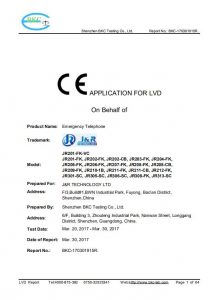
Compliance & Regulatory Standards




Frequently Asked Questions
Q1. What is the typical lifespan of a hands free telephone in industrial environments?
Industrial hands free telephones are designed for long-term use, often lasting several years depending on environmental conditions, usage frequency, and maintenance practices.
Q2. Can hands free telephones operate during power failures?
Some systems can be configured with backup power options such as battery support or integration with UPS systems to maintain communication during power outages.
Q3. How is audio performance affected by installation height and placement?
Proper placement is important. Installing the unit at an appropriate height and away from heavy vibration or direct noise sources helps improve voice clarity and user experience.
Q4. What maintenance is typically required for hands free telephones?
Maintenance is generally minimal and includes periodic inspection, cleaning of external surfaces, and checking connectivity to ensure consistent performance.
