
Why Two-Way Video Communication is Essential in High-Risk Environments
In high-risk environments, communication is not just operational; it is directly tied to safety, response time, and decision-making. Two-way video communication has become an increasingly important tool in industries where visibility and direct interaction support safer operations and a more effective response.
Unlike traditional voice-only systems, it adds visual context that enhances decision-making, particularly in sectors such as oil & gas, mining, transportation, correctional facilities, and critical infrastructure.
Here you will get to know how two-way video communication works, where it adds value, and what decision-makers should consider when implementing it.
What is an Industrial Two-Way Video Communication System
Two-way video communication refers to systems that enable real-time audio and visual interaction between two or more locations, allowing users to see and communicate with each other across locations.
These systems typically include video intercoms, IP-based communication devices, integrated surveillance and access control solutions, and remote monitoring platforms.
In high-risk environments, they are often deployed as part of a broader industrial communication system, specifically engineered to deliver reliable performance under extreme conditions such as noise, dust, moisture, and temperature variations.
How Industrial Video Communication Systems Improve Operations
It improves operational awareness and response by adding visual context to communication. It plays a critical role in enhancing security and operational control across high-risk environments.
1. Visual Verification Improves Decision Accuracy
In environments where safety is critical, relying on voice communication alone can lead to misinterpretation and incomplete information. Two-way video communication addresses this gap by enabling operators to visually confirm identities before granting access, assess situations as they develop, and detect suspicious behavior early.
This added layer of visual context is especially important in restricted zones, hazardous areas, and security-sensitive facilities, where fast, accurate responses are critical.
2. Faster Response Through Better Visibility
In high-risk operations, response speed depends on how quickly teams can understand what is happening on the ground. Two-way video communication provides direct visual access to incidents, equipment, and personnel, allowing operators to assess conditions without relying solely on verbal updates.
This is especially valuable in environments such as tunnels, industrial plants, and mining sites, where limited visibility and complex layouts can delay response. By seeing the situation directly, control room teams can determine the appropriate action more quickly, whether that involves escalation, containment, or continued monitoring.
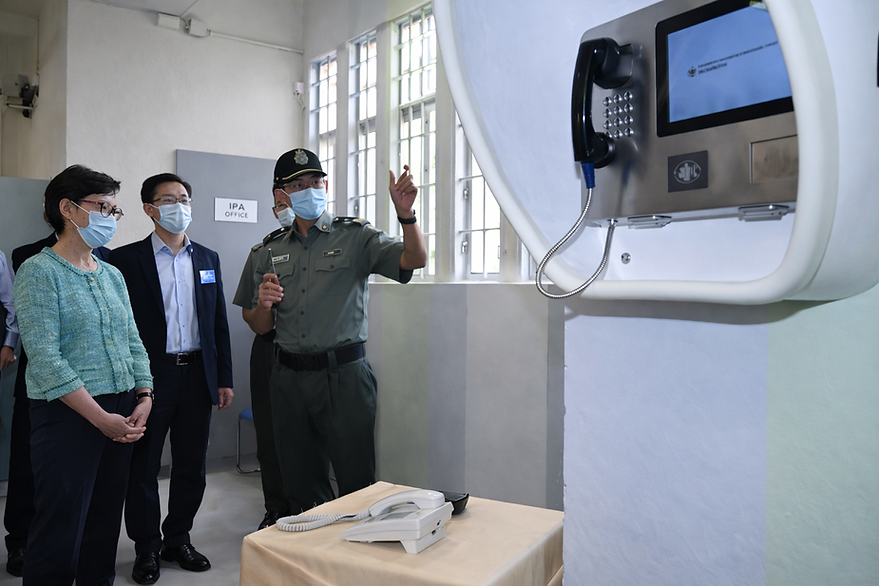
(Hong Kong Tai Tam Prison Project)
3. Enhanced Security and Access Control
Security is a major concern in infrastructure such as airports, railway stations, power plants, and correctional facilities. These systems help address these challenges by enabling visual identity verification, remote gate or door control, and seamless integration with video surveillance systems, ultimately reducing unauthorized access and strengthening overall facility security.
4. Better Communication in Noisy Environments
Industries such as mining, manufacturing, and oil & gas are extremely noisy, which can make clear communication challenging even with noise-canceling audio.
It adds an extra layer of clarity by enabling visual confirmation of actions, equipment status, and surrounding conditions, reducing misunderstandings and improving communication accuracy in high-noise environments.
5. Remote Monitoring and Reduced Downtime
Two-way video systems support remote troubleshooting and maintenance, which is essential for minimizing operational disruptions. They allow operators to visually inspect equipment, guide on-site personnel, and diagnose issues without the need to travel.
As a result, organizations can significantly reduce downtime, lower maintenance costs, and minimize response delays.
Tip: In practice, video systems are often combined with rugged emergency communication hardware to ensure reliability. In many deployments, industrial-grade emergency phones are used alongside video intercoms to maintain communication continuity, even if one system is compromised, including solutions from LightCom.
‘‘This integrated approach aligns with broader safety strategies, as explained in our article on how emergency communication systems help prevent tragedies in high-risk environments.’’
Common Mistakes When Implementing Two-Way Video Communication Systems
Implementing two-way video communication systems in high-risk environments requires more than just selecting the right devices. Proper planning, network readiness, and system integration play a critical role in ensuring reliable performance. The following common mistakes highlight areas that can impact effectiveness, safety, and long-term system reliability if not addressed early.
Insufficient Network Bandwidth: Poor bandwidth planning can lead to video lag, low quality, and unreliable communication during critical situations.
No Backup Communication System: Relying only on video without an audio fallback can result in complete communication failure if the video system is disrupted.
Poor Integration with Existing SIP Infrastructure: Lack of compatibility with existing communication systems can create operational inefficiencies and increase deployment complexity.
Ignoring Environmental Conditions: Using non-rugged devices in industrial or outdoor environments often leads to early system failure.
Features of Video Intercom Systems for Harsh Environments
Not all video communication systems are suitable for harsh conditions. When selecting a solution, look for the following key features:
Feature Category | Key Requirements |
Rugged & Vandal-Resistant Design | Protection ratings such as IP54 or higher, along with durable construction, are important for ensuring reliable operation in indoor and semi-outdoor industrial environments. |
Reliable Connectivity | Support for SIP/VoIP networks ensures seamless integration with existing communication systems, enabling stable and efficient voice and video communication. |
High Audio & Video Clarity | Equipped with HD cameras, noise-canceling microphones, and echo cancellation to maintain clear audio and video even in noisy environments. |
System Integration Capabilities | Compatible with SIP-based infrastructure, allowing integration with control rooms, security desks, monitoring systems, and remote management platforms. |
Practical Communication Features | Includes keypad dialing, speed dial, handset or hands-free communication options, and support for direct calling to predefined numbers or control centers. |

Technical Considerations for Industrial Video Communication Systems
High-performance video communication systems depend not only on device features but also on network design and system architecture. The following factors play a critical role in ensuring reliable operation:
Bandwidth and Latency Requirements: High-quality video communication depends on sufficient bandwidth and low latency. In critical environments, network stability directly impacts system performance and response time.
System Architecture (Centralized vs Distributed): Centralized systems allow easier management and monitoring, while distributed architectures improve resilience by reducing single points of failure.
Redundancy and Failover Strategies: Reliable systems often include backup communication paths, redundant network connections, or alternative devices to ensure uninterrupted communication.
Where Two-Way Video Communication Provides the Most Value
Two-way video communication becomes most valuable in environments where safety, security, and rapid decision-making are essential. Its ability to provide visual context supports better coordination and more effective response across mission-critical settings.
Industrial & Hazardous Sites – In these environments, video communication is typically deployed in safe or monitored zones, while hazardous areas require certified equipment such as ATEX or IECEx-rated devices.
Transportation Infrastructure – Essential in highways, tunnels, rail networks, and airports for continuous monitoring, incident management, and quick emergency response.
Public Safety & Security – Deployed in prisons, detention centers, government buildings, and border control points to enable visual verification, strengthen access control, and detect threats early.
Remote and Isolated Locations – Critical for offshore platforms, remote industrial facilities, and renewable energy sites, where it supports communication, remote monitoring, and operational control without constant on-site presence.
‘‘For a deeper comparison of when video-enabled systems are necessary versus audio-only setups, explore our guide on industrial intercom systems with or without cameras.’’

Real-World Use Cases of Our Two-Way Video Communication
Hong Kong Tai Tam Prison Project: As part of a smart prison initiative at Tai Tam, we implemented our two-way video communication system to enhance real-time monitoring and coordination across the facility. The objective was to improve visibility for operators while enabling faster response during critical situations. By integrating video communication with the existing surveillance infrastructure, we helped the facility achieve better situational awareness and streamlined internal communication between control rooms and on-ground personnel. This resulted in more efficient incident management and a noticeable improvement in overall security operations.
Columbia Prison Project: In the Columbia facility, our focus was on enabling secure, controlled interactions through two-way video communication. We deployed a system that allows operators to remotely verify identities, monitor behavior, and manage access points without requiring physical presence. This approach significantly reduced potential security risks while improving operational efficiency. The ability to handle interactions remotely not only enhanced safety for staff but also optimized day-to-day processes within the facility.

Two-Way Video Communication Backed by Industrial-Grade Reliability
Two-way video communication enhances operational control by allowing teams to verify conditions directly while maintaining reliable voice communication for coordination. These capabilities are typically delivered through a combination of video intercoms and rugged video telephones designed for secure and continuous communication.
Providers such as LightCom design these systems for high-reliability industrial use, supporting emergency communication with video so operators can visually assess situations while maintaining real-time coordination.
These solutions feature durable stainless steel housings and vandal-resistant construction (up to IK10), along with IP54-rated protection to support operation in indoor and semi-outdoor environments.
They support SIP/VoIP networks for seamless integration and include HD video, noise-canceling audio, and echo cancellation to ensure clear communication in noisy conditions. With flexible power options such as PoE and DC, they are suitable for a wide range of installations where reliability is essential.
By combining video with dependable voice communication, this approach allows operators to visually assess situations while maintaining a stable communication link, improving coordination, and maintaining reliable communication in demanding conditions.

👉 Important Note: While two-way video communication adds significant value, it is not a standalone solution. Performance depends on network reliability, bandwidth availability, and proper system integration.
In some environments, latency, hardware costs, and maintenance requirements can limit effectiveness. As a result, video systems are typically used alongside voice communication, not as a replacement.
Recommended Equipment for Integrated Communication
When building a reliable communication system for high-risk and industrial environments, combining multiple technologies ensures both operational efficiency and safety. A layered approach helps maintain communication continuity, even if one system fails.
Two-way Video Communication Devices for Verification and Interaction Solutions such as the LC213-KB-DP-S video intercom and the JR213-FK-SIP rugged video telephone enable real-time two-way video and voice communication. These devices allow operators to visually verify individuals, assess situations, and communicate effectively, even in high-risk or vandal-prone environments.
Emergency Phones for Fail-Safe Communication Industrial-grade emergency phones provide a reliable backup, ensuring voice communication remains available if video systems are unavailable or compromised.
Loudspeaker and Beacon Systems for Alerts These systems enable instant broadcasting of warnings or instructions across large, noisy, or hazardous environments.
Remote Monitoring and Control Platforms Centralized platforms allow operators to monitor live video feeds, manage devices, and coordinate responses efficiently from a control room.

This integrated approach strengthens security, improves response time, and ensures uninterrupted communication in critical situations.


Comments