
Case Study: 4G Emergency Phone for Transportation Facilities: LC202-AD-4G installed at Delaware River and Bay Authority

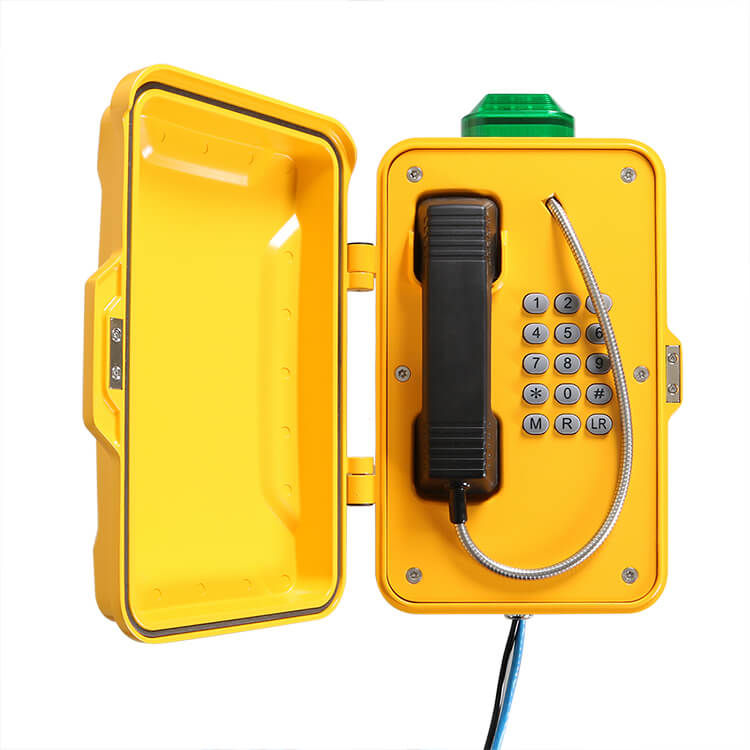
Compact LC202-AD-4G Vandal-Resistant 4G emergency phone for transportation facilities
The Delaware River and Bay Authority operates the kind of facilities where emergency communication cannot be treated as an afterthought.
Its infrastructure connects people across Delaware and New Jersey through major transportation assets such as the Delaware Memorial Bridge, ferry operations, airports, parking areas, public access zones, and support facilities. DRBA describes its mission around transportation connections on land, water, and in the air, including bridges, ferries, airports, and related public facilities.
These are not quiet office environments. They are places where people move, vehicles pass, weather changes, maintenance teams work, and communication equipment may be needed in areas where a normal desk phone would never survive.
For this type of application, LightCom supplied the LC202-AD-4G 4G emergency phone for transportation facilities — a compact 4G phone with an armored handset cord, automatic dialing, and rugged construction for public-facing or exposed locations.
The goal was simple: provide a fixed emergency communication point that is easy for anyone to use and does not depend on a local landline or Ethernet connection.
Why This Type of Facility Needs a Different Kind of Phone
Transportation authorities manage a mix of public, operational, and restricted areas. Some locations are busy and visible. Others are more remote: service corridors, maintenance buildings, gate areas, parking zones, utility spaces, outdoor walls, equipment rooms, or support areas where staff and visitors may still need a reliable way to call for help.
That creates a practical problem.
The best location for an emergency phone is often chosen by safety need, not by existing wiring.
A phone may be needed exactly where there is no analog phone line, no Ethernet drop, and no easy way to run new communication cable. In a transportation environment, adding conduit, trenching, pulling cable, coordinating shutdowns, or modifying existing infrastructure can make even a small communication project more expensive and slower than expected.
That is where a 4G emergency hotline phone becomes useful.
Instead of forcing the site to adapt to the phone, the phone adapts to the site.
The Challenge: Emergency Calling Without a Landline
Many facilities still need fixed emergency telephones, but the communication infrastructure around them has changed.
Traditional analog lines are disappearing from many sites. VoIP is available in some buildings but not always at the exact mounting location. Some emergency phone points are needed outdoors or in utility areas where network wiring is inconvenient. In public infrastructure, the phone has to be placed where a person may actually need assistance — not only where it is easy for contractors to install cable.
For the DRBA application, the requirement was clear: provide a rugged, compact emergency phone that could make a direct call over cellular service.
No keypad was needed. No local PBX connection at the wall was required. No landline was required. No Ethernet drop was required at the installation point.
The solution was the LC202-AD-4G.

The Device: LC202-AD-4G Vandal-Resistant Emergency Hotline Telephone
The LC202-AD-4G is not designed to be a standard office phone. It is designed to be a fixed, rugged, simple communication point for places where durability and ease of use matter.
The phone uses a familiar handset design, but the operation is intentionally simple: when the handset is lifted, the phone automatically dials a pre-programmed number.
That matters in a public-facing environment.
A visitor, employee, contractor, driver, or maintenance worker does not need to read a long instruction label, remember an extension, press multiple buttons, or understand the communication system behind the device. They simply lift the handset and speak.
The LC202-AD series is offered as a vandal-proof emergency hotline telephone with SIP, 4G, and analog communication options in LightCom’s emergency phone product line.
For this project, the 4G version was the right fit because it allows the emergency phone to operate as a fixed communication point without relying on a local wired phone or network connection at the installation location.
Why a Handset Was the Right Choice
Hands-free intercoms are excellent for many emergency call points. But they are not always the best answer.
In some public infrastructure environments, a handset still has real advantages.
A handset feels familiar. It creates a more private conversation. It helps the caller focus in a noisy area. It also makes the purpose of the device immediately obvious: pick up the phone and talk.
That familiarity matters when someone is under stress.
In a transportation facility, the person using the phone may be a visitor, a contractor, a driver, or an employee who does not use the site every day. A handset-based hotline phone reduces confusion because the action is natural.
There is no learning curve.
Why Vandal Resistance Matters
Emergency phones in public and semi-public areas are not treated like office equipment.
They may be exposed to rough handling, weather, dust, humidity, accidental impact, or intentional abuse. A normal commercial phone is not built for that environment.
The LC202-AD-4G uses a compact vandal-resistant design with an armored handset cord. That is important because the handset and cord are often the most vulnerable parts of a public phone installation.
For facility managers, vandal resistance is not only about preventing damage. It is about reducing downtime. An emergency phone that is broken, hanging loose, or missing a handset does not just look bad — it creates a safety and liability concern.
A rugged phone helps keep the communication point ready for the moment it is needed.
Why 4G LTE Was the Practical Communication Path
A 4G emergency phone is most useful when the site needs a fixed phone but does not have practical wired infrastructure nearby.
The LC202-AD-4G can be installed where power and cellular coverage are available, without waiting for a traditional landline or a network drop. That can be especially helpful for transportation and infrastructure sites with outdoor walls, remote areas, gate zones, parking areas, service entrances, equipment buildings, or support facilities.
DRBA’s broader operating environment includes the Delaware Memorial Bridge, Cape May-Lewes Ferry, Forts Ferry Crossing, and multiple airports in Delaware and New Jersey. Those types of facilities often include a variety of spaces where communication needs vary by location.
In that kind of environment, a cellular emergency hotline phone can solve a very practical problem: it gives the owner a fixed emergency communication point without requiring a full local communication infrastructure buildout at every phone location.
A Simple User Experience: Lift and Talk
The best emergency communication systems are usually the simplest.
With the LC202-AD-4G, the user experience can be reduced to four steps:
A person needs help.
They lift the handset.
The phone automatically calls the programmed number.
The caller speaks directly with the receiving party.
There is no keypad to misuse. There is no number to remember. There is no touchscreen to explain. There is no app to open.
The phone can be programmed to call a security desk, operations center, facility manager, dispatch point, or emergency contact, depending on the customer’s internal response procedure.
That makes it a good fit for locations where the user may be unfamiliar with the facility but still needs quick access to help.
Where This Type of Phone Makes Sense
A compact 4G vandal-resistant hotline phone is a strong fit for many transportation and infrastructure locations, including:
Bridge support facilities
Ferry terminal support areas
Airport service areas
Parking lots and parking structures
Maintenance buildings
Utility and equipment rooms
Security gates
Remote service entrances
Outdoor public access points
Industrial facilities
Municipal infrastructure
Parks and public areas
Locations where a landline or Ethernet drop is not available
The key requirement is simple: the site needs a fixed communication point that is durable, easy to use, and able to call directly over cellular service.
What Facility Managers Should Think About Before Choosing a 4G Emergency Phone
A 4G emergency phone is not simply a phone with a SIM card. For a reliable installation, several practical details should be checked before deployment.
Cellular signal at the exact location. The signal should be checked where the phone will actually be mounted, not just somewhere nearby.
Power availability. The installer should confirm the correct power source and whether backup power is required.
Call routing. The customer should decide who receives the call: security, operations, dispatch, facilities, or another emergency contact.
Mounting height and visibility. The phone should be easy to find and easy to reach.
Environmental exposure. Outdoor or harsh areas may require additional protection, weatherproofing, or location planning.
User instructions. Even when the phone is simple, a clear label such as “Lift handset for assistance” helps users understand the function immediately.
Testing procedure. Emergency phones should be tested periodically to confirm the call goes through and the receiving party understands the location.
These details are often more important than the technology itself. A good emergency phone installation is not only about selecting the device. It is about making sure the device fits the real operating conditions of the site.
Why This Project Is a Good Example for Other Customers
The DRBA application shows a common pattern we see across many projects.
The customer does not simply need “a phone.” The customer needs a dependable communication point in a specific place, for a specific purpose, under real-world conditions.
That is the difference.
For a public agency, transportation authority, industrial facility, campus, parking operator, utility site, or municipality, the challenge is rarely just choosing between analog, SIP, and 4G. The real question is:
What communication method will actually work at the location where people need help?
If a wired network is already available, SIP may be the best choice. If an analog line is still present and reliable, analog may be simple.If neither landline nor Ethernet is practical, 4G can be the cleanest path.
For this case, the 4G hotline model gave the customer a compact and rugged option without requiring local communication cabling at the phone location.
Why the LC202-AD-4G Is Different From a Standard Emergency Call Box
Many emergency call boxes use a push button and hands-free speaker. That style is effective in many environments. But the LC202-AD-4G solves a slightly different problem.
It provides a handset-based hotline experience in a compact vandal-resistant enclosure.
That is useful when the customer wants the caller to have a more traditional phone conversation. It is also helpful where privacy, noise, clarity, or user familiarity are important.
The armored handset cord and compact metal body make the device better suited for exposed or public-facing locations than a standard wall phone. The 4G connection makes it practical where a landline or Ethernet cable is not available.
In other words, it combines three important features:
Rugged body. Simple hotline dialing. Cellular connectivity.
That combination is what made it suitable for this transportation infrastructure application.
Emergency Communication Should Be Boring — Until It Matters
The best emergency phone is not supposed to attract attention every day.
It should sit in place, stay ready, and work when someone needs it.
For infrastructure operators, that is the real value. The equipment does not need to be complicated. It needs to be dependable, understandable, and correctly matched to the environment.
The LC202-AD-4G was supplied for exactly that purpose: a compact, vandal-resistant, 4G emergency hotline phone for a public transportation application where simple voice communication matters.
In a bridge, ferry, airport, parking, maintenance, or public-access environment, that kind of simplicity is not a small detail. It is the point.
Need a 4G Emergency Hotline Phone for Your Facility?
LightCom helps customers select emergency communication equipment for real site conditions, including locations without landlines, without Ethernet, or with difficult installation requirements.
The LC202-AD series is available in different communication configurations, including Analog, SIP/VoIP, and 4G LTE, depending on the project requirements and available infrastructure.
For transportation facilities, campuses, parking areas, industrial sites, utility locations, public infrastructure, and remote buildings, LightCom can help determine the right emergency phone configuration based on:
Communication method: Analog, SIP/VoIP, or 4G LTE
Mounting location
Power availability
Environmental exposure
Required call destination
Vandal-resistance needs
Handset vs. hands-free operation
Indoor or outdoor installation
When the goal is simple, direct emergency calling without a landline, the LC202-AD-4G vandal-resistant emergency hotline telephone is a practical solution worth considering.


Comments