
Explosion Proof Telephones: Requirements, Hazardous Zones, and How to Choose
- Vinayak Khattar
- Jan 6
- 6 min read
Imagine working in a place where a single spark could cause a major disaster. Oil refineries, chemical plants, gas stations, and mining sites are not just high-risk workplaces, they are environments where safety is everything. In such areas, even everyday devices like telephones can become dangerous if they are not designed correctly. This is where explosion proof telephones play a critical role.
Explosion proof telephones are specially built communication devices designed to work safely in hazardous locations. They allow workers to stay connected without increasing the risk of fire or explosion.
In this article, we’ll explain what explosion proof telephones are, the requirements they must meet, the different hazardous zones, and how to choose the right one for your workplace, all in simple and easy language.

What Makes a Telephone Explosion Proof
An explosion proof telephone is designed so that any internal spark, arc, or heat generated by the device is fully contained within the enclosure. The housing prevents ignition of the surrounding atmosphere, even if explosive gases or dust are present.
Construction characteristics include:
1. Flameproof enclosures – Constructed from cast aluminum, stainless steel, or glass-reinforced polyester to contain internal ignition and withstand harsh industrial conditions.
2. Precision-machined joints – Engineered to cool and quench flames, preventing ignition from escaping the enclosure.
3. Sealed cable entries – Fitted with certified glands to maintain explosion-proof integrity and block gas or dust ingress.
4. Anti-static and corrosion-resistant finishes – Reduce ignition risk while protecting against chemicals, moisture, and salt exposure.
5. Heavy-duty internal components – Built for continuous operation, mechanical stress, and long service life in hazardous environments.
These design principles ensure the telephone can operate safely in classified hazardous areas without compromising performance or audio clarity.
Explosion Proof Telephone Certification Requirements
International Standards and Approvals
Explosion proof telephones must comply with globally recognized certification schemes. The most common include:
ATEX (Europe) – Directive 2014/34/EU for equipment used in explosive atmospheres
IECEx (International) – Globally accepted certification for hazardous locations
UL and CSA (North America) – Compliance with NEC and CEC hazardous location standards
INMETRO (Brazil) and other regional approvals for local compliance
Each certification verifies that the device has undergone rigorous testing for temperature rise, impact resistance, ingress protection, and ignition containment.
‘‘LightCom’s explosion proof telephones are engineered and tested to meet ATEX, IECEx, and North American hazardous location standards, ensuring seamless deployment across global industrial sites.’’
Temperature Classes (T-Ratings)
Explosion proof telephones are rated according to maximum surface temperature, ensuring they do not ignite surrounding substances:
Temperature Class | Maximum Surface Temperature | Typical Application Relevance |
T1 | 450°C | Limited use; suitable only for high ignition temperature gases. |
T2 | 300°C | Rarely used; unsuitable for volatile or commonly encountered gases |
T3 | 200°C | Used only where ignition temperatures are high |
T4 | 135°C | Common industrial minimum requirement |
T5 | 100°C | Used in higher-risk environments |
T6 | 85°C | Highest safety level; required for highly volatile gases |
Selecting the correct temperature class is essential when dealing with volatile gases such as hydrogen or acetylene.
Hazardous Area Classifications
Gas Hazard Zones
Explosion proof telephones are commonly installed in areas classified by the frequency and duration of explosive gas presence:
Zone 0 – Explosive gas atmosphere present continuously or for long periods
Zone 1 – Likely to occur during normal operation
Zone 2 – Unlikely during normal operation and present only briefly
Telephones designed for Zone 1 applications are also suitable for Zone 2, when permitted by the applicable certification and installation conditions, offering broader operational flexibility.
Dust Hazard Zones
For environments with combustible dust:
Zone 20 – Continuous or frequent dust presence
Zone 21 – Likely during normal operation
Zone 22 – Rare and short-duration dust exposure
Dust-certified explosion proof telephones feature enhanced sealing and higher ingress protection ratings to prevent dust accumulation.
Ingress Protection and Environmental Resistance
Explosion proof telephones are often installed outdoors or in harsh industrial interiors. High IP ratings are critical:
IP66 – Protection against powerful water jets and dust ingress
IP67 – Temporary immersion protection
IP68 – Continuous immersion resistance
Additionally, these telephones are engineered to withstand:
Extreme temperatures ranging from sub-zero to desert heat
High humidity and salt-laden air in offshore environments
Chemical exposure in refineries and processing plants
Mechanical abuse and vibration in heavy industrial sites
Functional Features in Explosion Proof Telephones
1. Reliable Audio Performance
Clear communication is critical during emergencies, particularly in hazardous and high-noise industrial environments. Explosion proof telephones, including those engineered by manufacturers such as LightCom, incorporate noise-canceling microphones that suppress background machinery and ambient interference, ensuring speech remains intelligible even under extreme operating conditions.
High-output receivers deliver powerful, clear audio suitable for refineries, offshore platforms, and heavy manufacturing facilities, while automatic gain control continuously adjusts sound levels in real time to maintain consistent communication regardless of background noise or speaking volume.
2. Emergency and Safety Functions
Many explosion proof telephones are equipped with integrated safety features designed to support rapid response during critical situations. These include auto-dial or hotline functionality, allowing users to place instant emergency calls without manual dialing, as well as visual indicators that display call and system status in high-noise environments where audible alerts may be insufficient.
Hands-free operation with industrial-grade speakers enables effective communication when operators are wearing protective equipment or cannot hold a handset, while compatibility with public address (PA) and emergency communication systems ensures seamless integration into site-wide safety and evacuation protocols. Together, these capabilities enable fast, reliable communication when every second counts.
3. Connectivity Options and System Integration
Modern explosion proof telephones support multiple communication infrastructures:
Analog (PSTN) for legacy systems
VoIP (SIP-compliant) for IP-based networks
Integration with SCADA systems, control rooms, and emergency response networks ensures seamless communication across the facility.
Note: LightCom explosion proof telephones are available in analog, SIP-based VoIP, allowing seamless integration with existing control room, SCADA, and emergency communication systems.

Industries That Require Explosion Proof Telephones
Explosion proof telephones are essential across a wide range of industries, including:
Oil and gas production and refining
Petrochemical and chemical processing plants
Offshore platforms and FPSOs
Mining and mineral extraction sites
Pharmaceutical manufacturing
Grain handling and food processing facilities
In each of these sectors, reliable communication directly impacts personnel safety, operational continuity, and regulatory compliance.
LightCom solutions are widely deployed across oil and gas facilities, chemical plants, mining operations, and offshore installations where communication reliability directly impacts personnel safety.
How to Choose the Right Explosion Proof Telephone
Choosing the right explosion proof telephone means matching hazardous zone, environment, and communication needs to ensure safety and reliable performance.
1. Assess the Hazardous Area Classification
Begin by identifying whether the installation site is Zone 0, Zone 1, Zone 2, or dust-classified. This determines the minimum certification requirements.
2. Confirm Required Certifications
Always match the telephone certification with local regulatory standards. International approvals simplify deployment across global operations.
3. Evaluate Environmental Conditions
Consider exposure to corrosive chemicals, saltwater, UV radiation, vibration, and temperature extremes. Material selection is critical for longevity.
4. Select Appropriate Communication Technology
Choose analog, VoIP, or cellular based on network availability, redundancy requirements, and future scalability.
5. Prioritize Maintenance and Lifecycle Cost
Explosion proof telephones are long-term assets. Designs that offer easy servicing, replaceable components, and extended warranties reduce the total cost of ownership.
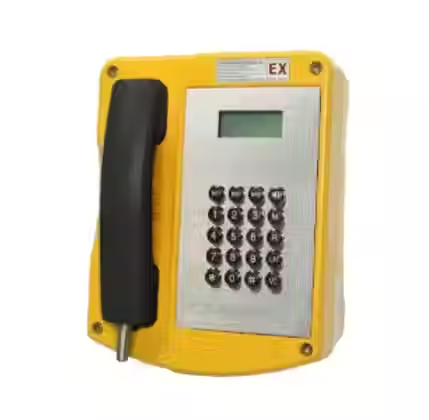
Explosion Proof Communication Solutions for Critical Industries
With decades of experience in hazardous communication systems, LightCom provides explosion proof telephones engineered for safety, compliance, and long-term reliability. Our solutions are trusted across industries such as oil and gas, mining, chemical processing, power generation, and heavy manufacturing, where exposure to flammable gases, dust, vibration, and extreme conditions demands certified and robust communication equipment.
Designed to meet the specific needs of each sector, LightCom telephones deliver clear, reliable voice communication even in the most challenging environments, helping industrial operators maintain safety, operational continuity, and regulatory compliance.
Compliance, Safety, and Operational Continuity
Explosion proof telephones play a pivotal role in industrial safety strategies. They enable rapid coordination during incidents, support evacuation procedures, and ensure continuous communication even during power or network disruptions when paired with backup systems.
By investing in certified, purpose-built equipment, we reduce risk, enhance compliance, and safeguard both personnel and infrastructure.

Final Thoughts
Explosion proof telephones are not optional accessories in hazardous environments; they are essential safety instruments. Understanding certification requirements, hazardous zone classifications, and performance features allows us to specify solutions that deliver unmatched reliability, safety, and compliance.
Selecting the right explosion proof telephone ensures that communication remains available when it is needed most, protecting lives, assets, and operations in the world’s most demanding industrial settings.


Comments