
Analog Telephone Line vs IP for Industrial / Rugged Phones: What You Need to Know

When a factory floor goes down, a mine shaft floods, or a remote site loses data connectivity — your phone line still has to work. In industrial deployments, engineers often choose between using a legacy analog telephone line and a modern IP (VoIP) connection. But the decision isn’t trivial. Done wrong, you may suffer interference, high maintenance, or communication blackouts.
I’ll break down the real advantages and disadvantages of analog lines for industrial phones — compared with IP — so you can pick the right approach (or hybrid) for your project.
Why Many Engineers Still Trust Analog Telephone Lines
Pros of Analog Telephone Line in Rugged Deployments
Simplicity & Compatibility Analog lines use tried-and-true copper pair connections. Many rugged and industrial phones are built to interface with plain old telephone service (POTS) with no extra adapters. There’s less protocol overhead and fewer moving parts to fail.
Long Reach and Lower Infrastructure Needs Analog lines can often go farther over before signal loss (depending on gauge and quality), compared to IP which may require signal boosters, repeaters, or high-quality data links. In remote sites without reliable network infrastructure, analog still “just works.”
Power from the Line (in many cases) In many legacy telephone networks, the line provides a DC feed (nominally around −48 V) sufficient to power basic analog handsets. That means simpler designs in some cases, without needing separate power supply. This is often cited as a strength of POTS (plain old telephone service). (However, this becomes challenging over long distances or heavy loads.)
Reliability & Independence from Network Load Analog lines are largely immune to network traffic congestion. They don’t share bandwidth with IP, so you avoid dropped calls due to data overload. In some harsh environments, that reliability is essential.
Lower Latency / No Packetization Delay Because analog is a continuous circuit, you avoid delays, jitter or packet loss issues common to IP/VoIP. For critical communication (alarms, emergency calls) that timing consistency can matter.
Cons / Risks of Using Analog Telephone Line
Sensitivity to Electromagnetic Interference (EMI) and Noise Copper pairs in industrial environments can pick up induction from motors, switching, heavy machinery, welding, etc. This can lead to buzzing, signal distortion, or call drops in analog lines.
Signal Degradation Over Length / Attenuation Over very long runs, the resistance and capacitance of the copper line cause voltage drop and weakening signal. The further you go, the weaker your loop current becomes, which can break the line power or make telephony unreliable.
Limited Features / Scalability Analog supports only basic voice operations (dial, ring, on/off hook). Advanced features — like simultaneous video, multiple lines, dynamic routing, conferencing — are challenging or impossible without extra equipment.
Vulnerability to Faults / Single Point of Failure A cut or corrosion in the analog cable may render the line useless — there's no redundancy at the protocol level.
Line Power Limitations While the line may supply DC power, that works only if the pair is short and resistance low. Over long runs, that power may be too weak to drive a rugged phone, requiring auxiliary power (solar, local battery, or local supply).
Future Obsolescence & Support Risks Many telecom carriers are retiring legacy copper networks and pushing IP. Dependence on analog may lead to challenges in modernization, higher service costs, or line decommissioning.
Why IP / VoIP Still Makes Sense in Many Industrial Setups
Before choosing analog blindly, consider these strong advantages of IP (VoIP) connections:
Huge feature richness — video, directory integration, remote diagnostics, auto provisioning, intercom, data and voice over the same network.
Scalability & flexibility — adding new endpoints is simpler; no need to run new copper lines.
Lower call & infrastructure cost long term — fewer “line charges,” more usage over existing networks.
Integration with modern systems — your phone data, logs, alarms, system monitoring can all be tied into your IT / SCADA / building systems.
However, IP is only as reliable as your data network: if the network is intermittent, overloaded, or power is unstable, the voice path can fail.
How to Choose (or Use Hybrid)
Measure your existing copper line (resistance, noise) and compute whether line power is viable
Decide which calls are critical — is basic voice enough, or do you need video, directory lookup, real-time diagnostics?
Use analog where reliability and simplicity matter, and IP where features and flexibility are crucial
Consider hybrid / fallback methods — for example, primary IP connection with analog as backup, or IP with a local analog fallback, or analog lines with a 4G/solar gateway in extreme locations
Practical Tip: Explore Rugged Analog Phones
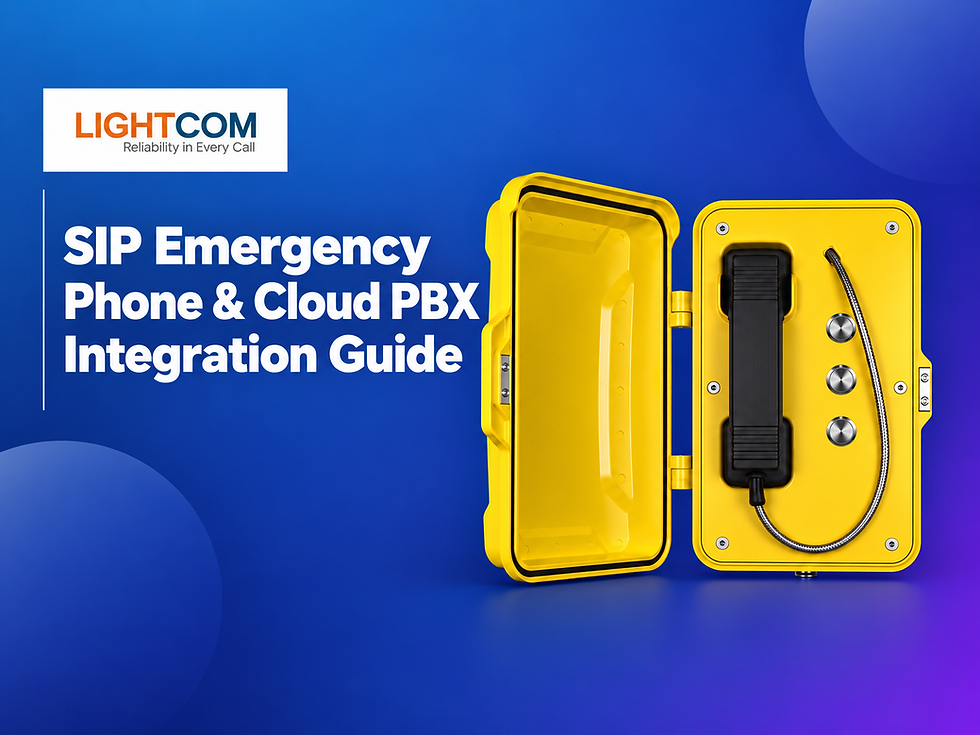
If you opt for analog, check out hardened industrial models — see LightCom’s analog telephone line products — built to tolerate abuse, weather, and harsh conditions while using analog POTS.
These rugged analog phones are designed precisely to handle the vulnerabilities of analog lines (EMI shielding, robust casing, good loop sensitivity) while offering the simplicity and reliability of analog.
Final Word
Don’t gamble with your critical communications. Using the wrong type of connection — analog or IP without the right conditions — can mean failure when you need it most. Choose intelligently: use analog telephone line when simplicity and reliability are your core need, but don’t ignore IP when flexibility and scale become essential.
If you want help designing or comparing a hybrid solution tailored to your site, We’d be glad to assist. Just reach out.



Comments